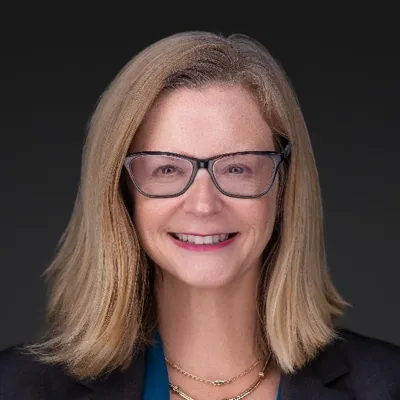
Cary Swensen
When our students thrive, our neighborhoods thrive, and the city of Salinas thrives.
On the education of Salinas students
Key Issues
About
Cary Swensen is an educator and small business owner. She is the Owner and Executive Director of Sylvan Learning of Salinas/Monterey at 1465 N. Davis Road, which she has run for roughly fifteen years after a 26-year career with Sylvan Learning. She also teaches American History at Hartnell College, including a section at Salinas Valley State Prison, and is a member of the California Teachers Association.
She holds a B.A. in Education from Western Washington University and an M.A. in History from the University of Colorado, Boulder.
Cary serves on the City of Salinas Measure G Sales Tax Oversight Committee and the Monterey County Housing Advisory Committee, and is a Past President of the Steinbeck Rotary Club. She is also a board member of Seeds4STEM and the Civil Rights Board, an organizer with Latina Leads, and a volunteer with Meals on Wheels of the Salinas Valley. She previously ran for the District 3 seat in 2022 against incumbent Steve McShane and in the 2024 special election won by Margaret D’Arrigo.
Biography and issue labels summarize the candidate’s questionnaire response, published May 17, 2026. The complete answers appear below with their substance retained; any formatting or safety change is marked.
At a Glance
2026 Filings
Data as of 2026-09-19. From the campaign statements committees filed with the City of Salinas; coverage differs by committee.
Committee: Swensen for City Council District 3 2026 ID 1490549
Statement coverage: 2026-01-01 to 2026-09-19
- Monetary contributions
- $8,300
- Later reported receipts
- $0
- Payments
- $2,288
- Ending cash
- $6,512
- New loans received (gross)
- $500
- In-kind
- $0
- Itemized unpaid bills
- $0
- Outstanding debt
- $500
Each measure is reported separately and never added to another. Ending cash, unpaid bills and outstanding debt are balances at the end of the coverage period; later receipts were reported after the committee’s latest full statement.
The 2024–2025 history on this page is a separate dataset with different periods and labels; the two are not added together.
This candidate in 2026 Money →2024–2025 History
2024 District 3 election cycle · most recent committee in the May 17 snapshot. A separate dataset from the 2026 filings above.
Top Filing-Name Totals
- Monterey County New Progressive$5,500
- Northern California Carpenters Regional Council Small Contributor Committee$5,500
- Parker, Jane$3,000
No 2026 filings are included in the May 17 snapshot. The 2026 committee’s statements are in the 2026 Filings section above. Her 2024 committee summary reports $22,740 across 30 contributions (an average of $758). The itemized Schedule A rows loaded here total $22,320, leaving a documented $420 source reconciliation; rows are not altered to force agreement.
In Their Own Words 5 min read
Transparent Salinas uses the same six-question form for candidates it contacts in a covered race; outreach dates can differ and are listed in each profile. Responses retain their substance; any formatting or safety redaction is marked.
1. What’s one thing about Salinas that keeps you up at night?
“The education of Salinas students. I think about whether our young people are truly getting the support, safety, and opportunities they deserve. When our kids struggle — academically, emotionally, or socially — our entire community feels it. Their challenges become our challenges, and their success becomes our shared success.
What keeps me up at night is knowing how much potential our students have, and how many barriers still stand in their way. Too many families are navigating school systems without enough guidance. Too many students are falling behind without timely intervention. And too many young people are unsure whether they have a real path to college, a trade, meaningful work, or a stable future.
As the District 3 City Council Member, I want to unite all stakeholders — schools, families, nonprofits, city departments, and community partners — to strengthen the educational pipeline from early childhood through high school and beyond. Education is not just a school issue; it is a city issue. When we invest in our students, we invest in public safety, economic stability, and the long-term health of Salinas.
My hope is simple: that every child in Salinas has a clear, supported, and achievable path to success. When our students thrive, our neighborhoods thrive, and the city of Salinas thrives.”
2. What’s something you think the city is getting right that people do not see?
“Our community partnerships. Across Salinas, there are nonprofits, neighborhood groups, educators, and city staff quietly doing the hard work every single day — often without recognition. These partnerships are the backbone of so many efforts that keep our city moving forward: youth programs that give kids a safe place to learn and grow, violence‑prevention initiatives that build trust, and neighborhood‑level collaborations that strengthen families and improve quality of life.
What people don’t always see is how coordinated and committed these teams are. City staff work hand‑in‑hand with community organizations to solve problems long before they become crises. Nonprofits step in to fill gaps with creativity and compassion. Residents volunteer their time to support parks, schools, and local events. None of this makes headlines, but it absolutely makes a difference.
To me, these partnerships show the best of Salinas — people who care deeply about their neighbors and are willing to work together to make our city stronger. I believe that when we invest in and elevate these collaborations, we unlock some of the most powerful tools we have for improving safety, opportunity, and community well‑being.”
3. If you could fix one thing in your district tomorrow, what would it be?
“I would improve neighborhood safety and walkability. District 3 deserves well‑lit streets, safe sidewalks, and parks where families feel comfortable spending time. When people feel safe moving through their own neighborhoods — walking to school, visiting a local business, or taking their kids to the park — everything else becomes possible.
Right now, too many areas in District 3 struggle with poor lighting, uneven or missing sidewalks, and public spaces that don’t feel welcoming after dark. These are basic quality‑of‑life issues, but they have a huge impact on how connected and confident people feel in their community.
Fixing this isn’t just about infrastructure. It’s about restoring a sense of pride and belonging. When streets are well maintained and parks are active, families come out, neighbors talk to each other, and young people have safe places to gather. That’s when you start to see local businesses thrive, community events grow, and residents feel invested in their neighborhood’s future.
If I could change one thing tomorrow, it would be to make every block in District 3 a place where people feel safe walking, playing, and living their daily lives. That’s the foundation for a stronger, healthier, more vibrant Salinas.”
4. What is an improvement you’ve made in your district or the city that you’re proud of?
“I’m proud of helping bring more attention and resources to our schools and youth programs. For years, I’ve worked to make sure our young people aren’t overlooked — whether that means supporting after‑school activities, advocating for afterschool programs, or connecting families with services they didn’t know were available. Strengthening the bridge between families, schools, and community organizations has been a major focus of my work, because when students and parents feel supported, the whole city benefits.
I’m also proud of something that often goes unseen: I’ve stayed involved in Salinas long after election season ends. I’ve run twice, and win or lose, I’ve never stepped away from the work. I don’t just show up during campaign season — I stay engaged with city representatives, community leaders, and residents’ year‑round because the issues we face don’t disappear when the signs come down.
Right now, I’m working with Margaret D’Arrigo, local landlords, property managers, and Protect Salinas Renters on the development of a Rental Board for the City of Salinas. It’s a challenging but important effort that brings together people with very different perspectives to create a fair, transparent system for both renters and property owners. This kind of collaboration is exactly what our city needs more of.
At the end of the day, my involvement isn’t about me — it’s about the residents of Salinas. I’m committed to being an engaged community member no matter the outcome of any election, because the work of building a safer, stronger, more supportive city is ongoing. And I’m proud to be part of that work every single day.”
5. What do you want to be remembered for when your term ends?
“I want to be remembered as someone who listened, who showed up, and who fought for families. Someone who made decisions based on what was best for the community — not politics, not pressure, and not personal gain. My goal is to lead with integrity, transparency, and a genuine commitment to the people who call Salinas home.
I hope people will remember that I was present in their neighborhoods, that I took the time to hear their concerns, and that I worked alongside them to find real solutions. I want to be known as a council member who brought people together — parents, educators, nonprofits, city staff, and local businesses — to build a safer, stronger, more hopeful Salinas for the next generation.
Most of all, I want to be remembered for helping create a city where families feel supported, young people feel seen, and every resident feels like their voice matters. If, at the end of my term, people can say I helped make life a little better for the community, then I will consider that a success.”
6. What should Salinas look like in 10 years?
“A city where families feel safe, kids have real opportunities, and neighborhoods are clean, vibrant, and connected. I want Salinas to be a place where people stay because they see a future here — a city known for innovation, education, and community pride.
In ten years, I want to see neighborhoods with well‑lit streets, safe sidewalks, and parks full of families. I want our schools to be strong, supported, and deeply connected to the community, with clear pathways for students to move into college, trades, or meaningful careers. I want local businesses to thrive because residents feel confident investing in their own city.
I also envision Salinas where collaboration is the norm — where city departments, nonprofits, schools, and residents work together to solve problems instead of working in silos. A city where housing is more stable, where renters and property owners have fair systems in place, and where families don’t have to choose between affordability and safety.
Most of all, I want Salinas to be a place where people feel proud to live — a city that honors its agricultural roots while embracing innovation, creativity, and opportunity. A city where every resident, no matter their background or neighborhood, feels seen, supported, and hopeful about the future.”
Timeline
Questionnaire responses retain their substance; clearly marked formatting or safety redactions may be made. Candidates the project contacts in the same covered race receive the same questions, but not necessarily on the same date; the invitation and response status above reflects the project’s outreach log. Unless submitted in Spanish, text on Spanish pages is a Transparent Salinas translation; if it differs, the original-language response controls. Compare this full 2026 field.